Sigenergy Battery Price UK: SigenStor Price List, Specs & Review
John Rooney is the founder of Solar Info and has been covering the UK solar energy market since 2023. He researches every battery and inverter brand against manufacturer datasheets, MCS and Ofgem data, and feedback from the MCS-certified installers in our directory before publishing.
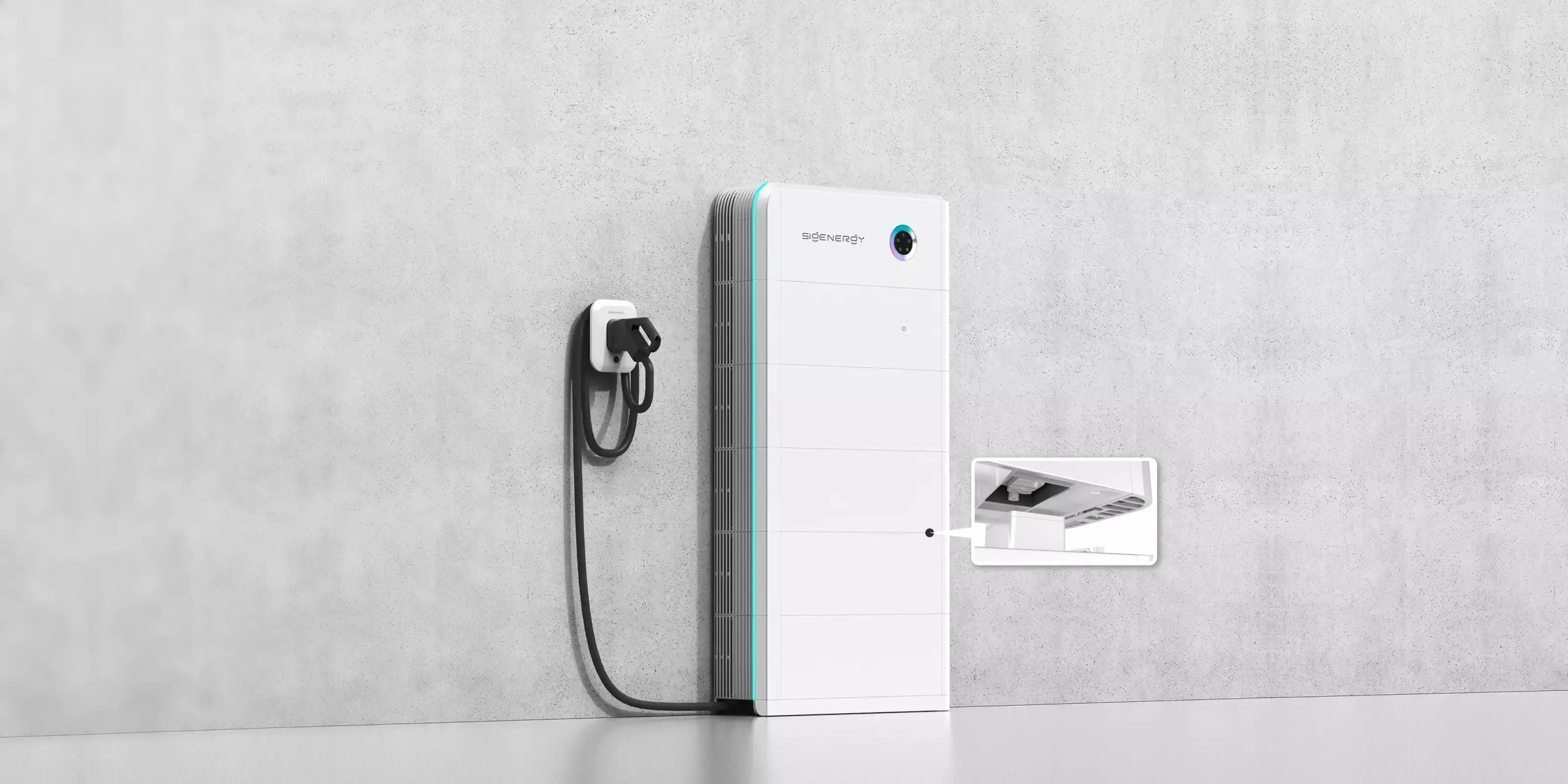
Sigenergy is a fast-growing energy storage company whose SigenStor is an all-in-one hybrid inverter, battery, and EV charging system. This is our independent UK review of the Sigenergy battery: prices, sizes, the gateway, the app, AI energy management, and how it compares to the Tesla Powerwall 3 and other home battery brands.
Quick Answer
A Sigenergy battery costs roughly £3,500 to £9,600 installed in the UK, or about £550 to £750 per usable kWh, with a typical payback of 9 to 12 years alongside solar. The SigenStor is an all-in-one hybrid inverter, stackable battery (6kWh to 54kWh) and EV charger with AI energy management. Its built-in AC/DC EV charging with vehicle-to-grid is genuinely rare, and it was the #1 battery brand in Australia by capacity in 2025. Prices include 0% VAT until March 2027.
Who Are Sigenergy?
Sigenergy is an energy technology company founded in 2022 that has grown rapidly in the residential solar battery market. They don't make solar panels, instead they make the hybrid inverter, battery storage, and EV charging system that works alongside any brand of solar panels.
In March 2025, Sigenergy was ranked the #1 battery manufacturer in Australia by blended capacity (SunWiz report). The SigenStor took 2nd place in the 2025 Installers' Choice Awards. They are expanding rapidly in the UK with a growing network of MCS-certified installers.
2022
Founded
#1
AU battery market
54kWh
Max capacity
EV
Charging built-in
SigenStor: The All-in-One System
The SigenStor combines a hybrid solar inverter, stackable battery modules, and an EV charger in one integrated system. This means you need fewer separate components, simpler installation, and one app to manage everything.
Hybrid Inverter
5kW, 8kW, 10kW, or 12kW options. Up to 4 MPP trackers, 97.6% conversion efficiency, DC/AC ratio up to 2. IP66 rated for outdoor installation.
Stackable Battery
LFP (Lithium Iron Phosphate) modules in 6kWh (BAT-6.0) or 9kWh (BAT-9.0) units. Stack up to 54kWh per tower. Add modules as your needs grow, no need to replace the whole system.
EV Car Charger
Built-in AC and DC EV car charger. Supports vehicle-to-grid (V2G) and vehicle-to-home (V2H). Your EV battery becomes an extension of your home storage, no separate car charger needed.
SigenStor System Specifications
| Component | Specification |
|---|---|
| Inverter Power | 5kW / 8kW / 10kW / 12kW |
| MPP Trackers | Up to 4 |
| Inverter Efficiency | 97.6% |
| DC/AC Ratio | Up to 2 |
| IP Rating | IP66 (dust and rain resistant) |
| Battery Modules | 6kWh (BAT-6.0) or 9kWh (BAT-9.0) per module (LFP) |
| Max Battery Capacity | 54kWh per tower (6 module slots) |
| Battery Chemistry | Lithium Iron Phosphate (LFP) |
| Usable Capacity | 97% DoD (5.84kWh usable from BAT-6.0, 8.76kWh from BAT-9.0) |
| EV Charging | AC (7kW) + DC (12.5–25kW), V2G, V2H |
| AI Management | Yes, weather, usage, tariff optimisation |
| Battery Warranty | 10 years |
| Inverter Warranty | 10 years |
| Gateway Warranty | 5 years |
The Sigenergy Hybrid Inverter (Energy Controller)
The inverter in a SigenStor stack is the module retailers list as the SigenStor Energy Controller. It's a hybrid inverter, meaning it handles solar generation and battery charging in one unit, with up to 4 MPP trackers and 97.6% efficiency. UK single-phase models run from a 3.6kW entry size up to 12kW, with 5kW to 12kW the common choices for homes with solar panels.
There is no separate “Sigenergy inverter price” for most buyers because the inverter is quoted as part of the SigenStor system: a 5kW system starts from around £3,500 installed and a 10kW system from around £5,500. If you already have solar panels, the SigenStor replaces your existing string inverter rather than adding to it, which is worth flagging when you request quotes for a retrofit.
Sizing rule of thumb: match the inverter to your panel array (a 4kWp array pairs with the 5kW unit) and don't oversize, the DC/AC ratio of up to 2 means a 5kW inverter can already accept up to 10kWp of panels. Our inverter comparison guide covers sizing in more detail.
Sigenergy Battery Price List UK (2026)
Sigenergy don't publish an official UK price list, so we've built one from real installer quotes. The price depends on the battery capacity and inverter size you choose: as a rule of thumb, expect to pay around £550 to £750 per usable kWh installed, with the per-kWh cost falling as you add more modules to the same inverter and gateway. Here is the full Sigenergy battery price list from UK solar installers:
| Configuration | Battery | Inverter | Estimated Price (installed) | Approx. £/kWh |
|---|---|---|---|---|
| Starter | 6kWh (1 × BAT-6.0) | 5kW | £3,500–£4,500 | ~£680–£770 |
| Standard | 9kWh (1 × BAT-9.0) | 8kW | £4,500–£6,000 | ~£510–£685 |
| Popular | 12kWh (2 × BAT-6.0) | 10kW | £5,500–£7,000 | ~£470–£600 |
| Large Home | 18kWh (2 × BAT-9.0) | 10kW | £7,500–£9,600 | ~£430–£550 |
| Maximum | 54kWh (6 × BAT-9.0) | 12kW | £17,000–£21,000+ | ~£315–£390 |
Prices are approximate and vary by installer. The Sigenergy inverter price is included in the system cost above, you don't buy the inverter separately. Adding the Sigenergy DC EV charging module typically costs from £3,500 extra. All prices include 0% VAT (available on solar and battery installations until March 2027).
Payback: paired with a new solar panel system and a Smart Export Guarantee tariff, most UK homeowners see a Sigenergy battery pay for itself in roughly 9 to 12 years, driven by self-consumption savings plus cheap off-peak charging on tariffs like Octopus Agile. Battery-only retrofits (no new solar) tend to sit at the longer end of that range.
Sigenergy Battery Sizes & Dimensions
Sigenergy batteries are stackable LFP modules. You start with one module and add more as your needs grow. The two module sizes (BAT-6.0 and BAT-9.0) can be combined to hit common UK home capacities of 5kWh, 8kWh, 10kWh, 12kWh, 18kWh and beyond.
| Common search | Sigenergy module | Nominal capacity | Usable (97% DoD) |
|---|---|---|---|
| Sigenergy 5kWh battery | 1 × BAT-6.0 | 6.0kWh | 5.84kWh |
| Sigenergy 8kWh battery | 1 × BAT-9.0 | 9.0kWh | 8.76kWh (closest match) |
| Sigenergy 10kWh battery | 2 × BAT-6.0 (stacked) | 12.0kWh | 11.68kWh |
| Sigenergy 10kW battery | 2 × BAT-6.0 + 10kW inverter | 12.0kWh | 11.68kWh |
| Sigenergy 12kWh battery | 2 × BAT-6.0 | 12.0kWh | 11.68kWh |
| Sigenergy 18kWh battery | 2 × BAT-9.0 | 18.0kWh | 17.52kWh |
| Sigenergy 24kWh battery | 4 × BAT-6.0 | 24.0kWh | 23.36kWh |
| Sigenergy 36kWh battery | 4 × BAT-9.0 | 36.0kWh | 35.04kWh |
| Sigenergy 54kWh battery | 6 × BAT-9.0 (max tower) | 54.0kWh | 52.56kWh |
Note: people often search “Sigenergy 10kW battery” when they mean a 10kW inverter paired with a battery (Sigenergy uses kW for inverters and kWh for battery capacity). The closest direct match is the 12kWh stack with the 10kW hybrid inverter.
Sigenergy battery dimensions
| Component | Dimensions (W × D × H) | Weight |
|---|---|---|
| BAT-6.0 module (6kWh) | 625 × 270 × 207 mm | ~63 kg |
| BAT-9.0 module (9kWh) | 625 × 270 × 297 mm | ~91 kg |
| SigenStor inverter (5–12kW) | 625 × 270 × 308 mm | ~36 kg |
| Gateway | 625 × 270 × 90 mm | ~10 kg |
| Full 18kWh tower (2 × BAT-9.0 + inverter + gateway) | 625 × 270 × ~995 mm | ~228 kg |
Dimensions are from the Sigenergy SigenStor datasheet. All modules share the same 625 × 270 mm footprint, so the system stacks vertically and only requires a single wall location. IP66 rating means it can be installed indoors or outdoors.
Sigenergy Gateway: What Does It Do?
The Sigenergy gateway is the communication hub of the SigenStor system. It connects the hybrid inverter, battery modules, and EV charger to your home Wi-Fi and the Sigenergy cloud platform.
System Monitoring
The gateway reports real-time data on solar generation, battery charge level, grid import/export, and EV charging status to the Sigenergy app on your phone.
AI Optimisation
The gateway runs the AI energy management algorithms, pulling weather forecasts and electricity tariff data to optimise when to charge, discharge, or export.
Firmware Updates
Over-the-air updates keep your system current with new features and performance improvements. The gateway handles all updates automatically.
Note the naming: the communication module above is built into every SigenStor. The separate Sigen Energy Gateway (the HomePro unit) is an optional add-on that enables whole-home backup in a power cut, with UK hardware retail prices of roughly £1,030 to £1,315 including VAT. It carries a 5-year warranty (shorter than the 10-year battery and inverter warranty).
We cover the backup unit in full, including the HomePro SP vs SP-F trap in installer quotes, in our Sigenergy Gateway guide.
Sigenergy App: Monitor & Control Your System
The Sigenergy app (available on iOS and Android) gives you full visibility and control over your SigenStor system from your phone.
What You Can See
- • Real-time solar generation (kW)
- • Battery charge level and state of health
- • Grid import/export in real time
- • EV charging session status and history
- • Daily, weekly, and monthly energy reports
- • Estimated savings and self-consumption ratio
What You Can Control
- • Switch between AI auto, self-consumption, or time-of-use modes
- • Set battery charge/discharge schedules
- • Start/stop EV charging remotely
- • Set EV charge limits and departure times
- • Enable/disable grid export
- • View and update firmware via gateway
How Sigenergy Is Installed
Sigenergy installation must be carried out by a trained, MCS-certified installer. MCS certification is required for the system to qualify for Smart Export Guarantee (SEG) payments and 0% VAT.
Day 1, Solar & Inverter
Solar panels are mounted and wired to the SigenStor hybrid inverter. The inverter is fixed to a wall (interior or exterior, IP66 rated).
Battery & Gateway
Battery modules stack onto the inverter base. The gateway sits on top, connecting everything to your Wi-Fi and the Sigenergy cloud. No separate hub or BMS box required.
Commissioning & G99
Installer registers the system with MCS, applies for DNO approval (G98 for systems ≤3.68kW per phase, G99 above) and submits the SEG application to your chosen energy supplier.
Most domestic Sigenergy installations are completed in 1 to 2 days for solar + battery, or 2 to 3 days if the DC EV charger module is included. The system supports retrofitting to existing solar arrays, so you don't need to replace your panels.
Sigenergy installers in the UK are typically also certified for EV charger installation (OZEV-approved), which simplifies the project if you're adding the DC EV charging module at the same time.
Sigenergy Installers UK: Find One Near You
Sigenergy doesn't sell direct, the SigenStor is supplied and fitted by MCS-certified solar installers. Because it's a hybrid inverter and battery in one, any competent MCS solar and battery installer can source and commission it. There is no separate “Sigenergy-only” approved list in the UK, so the best route is to find a local MCS installer and ask whether they fit SigenStor (most will, or can order it in).
The quickest way to compare Sigenergy installers near you is to browse MCS-certified installers by county and check each company's reviews, or request quotes below and we'll match you with installers covering your area. (You'll also see the brand written as “Sig Energy” or “SigEnergy”, it's the same company and the same SigenStor system.)
Sigenergy installers by county
Not listed? See all UK counties. We cover MCS solar and battery installers across England, Scotland, Wales and Northern Ireland.
Get Sigenergy quotes from local installers
Tell us your postcode and we'll match you with MCS-certified installers near you who can quote for a SigenStor system.
Sigenergy with Home Assistant
Sigenergy supports integration with Home Assistant via Modbus TCP, so you can pull live data into your smart-home dashboard alongside other devices (heat pumps, EV chargers, smart meters, octopus tariffs).
What you can read
- • Solar PV generation (per MPPT and total)
- • Battery state of charge, power flow, temperature
- • Grid import/export power and energy
- • EV charging session status and energy
- • Inverter status, faults, and firmware version
What you can write
- • Switch operating mode (self-use / TOU / backup)
- • Force charge or discharge battery on schedule
- • Cap grid import or export power
- • Trigger EV charging start/stop
The community-maintained sigenergy2mqtt and HACS integrations expose every Modbus register the gateway publishes. You will need the gateway's local IP address and Modbus enabled by your installer at commissioning (usually a checkbox in the installer app).
Home Assistant integration is unofficial, Sigenergy don't support it directly, but the Modbus protocol is documented and stable. Most UK Sigenergy owners use it to drive automations against Octopus tariffs like Agile and Intelligent Flux.
Sigenergy Login & Technical Support
Sigenergy login
Homeowners log in to the mySigen app (iOS / Android) using the email address registered at commissioning. Installers use the separate SigenCloud portal for fleet management and remote diagnostics.
If you bought a Sigenergy system from a previous owner, ask your installer to transfer ownership in SigenCloud, you can't do this yourself from the homeowner app.
Sigenergy technical support UK
First line support is your installer, they can pull diagnostics through SigenCloud and reach Sigenergy direct. For warranty claims, your installer raises the ticket on your behalf.
Sigenergy run a UK/EMEA support team reachable via the contact form on sigenergy.com/support. Response times are typically 1 to 3 working days for non-urgent queries.
AI Energy Management: How It Works for UK Homes
Sigenergy's AI software automatically manages your energy to maximise savings. It learns your usage patterns and optimises based on:
Self-Consumption
Stores excess solar during the day and releases it in the evening when you need it. Maximises the amount of free solar electricity you use directly.
Time-of-Use Tariffs
With a smart meter, time-of-use tariffs like Octopus Agile or E.ON Next Flex let you pay less for off-peak electricity. The AI charges from the grid when electricity is cheap and uses stored energy during peak hours.
Export Management
Manages Smart Export Guarantee (SEG) payments by deciding when to export surplus solar vs when to store it for later self-consumption. Best SEG rates pay up to 24p/kWh.
Sigenergy vs Tesla Powerwall 3: Which Is Better?
The Sigenergy SigenStor and the Tesla Powerwall 3 are the two most-compared all-in-one home batteries in the UK. Both bundle a hybrid inverter with LFP storage and a 10-year warranty. So which one? Pick Sigenergy if you want stackable capacity and built-in EV charging. Pick the Tesla Powerwall 3 if you want the most proven track record and the simplest fixed 13.5kWh unit. We compare installed prices, backup and warranties in full in our Sigenergy vs Tesla Powerwall 3 guide.
| Feature | Sigenergy SigenStor | Tesla Powerwall 3 |
|---|---|---|
| Battery Capacity | 6kWh–54kWh (stackable) | 13.5kWh (fixed) |
| Expandable | Yes (add modules) | Limited (add units) |
| Built-in Inverter | Yes (up to 12kW) | Yes (11.5kW) |
| EV Charging | Built-in AC + DC, V2G | No (separate charger needed) |
| AI Management | Yes | Yes |
| Battery Chemistry | LFP | LFP |
| Warranty | 10 years | 10 years |
| Price (approx.) | £4,500–£9,600+ | £7,000–£9,000 |
Verdict: Sigenergy wins on flexibility (stackable capacity) and integrated EV charging. Tesla wins on brand recognition and proven track record. For UK homes with EVs, Sigenergy's built-in V2G charging is a genuine differentiator.
Known Issues
In November 2025, Sigenergy issued a voluntary safety recall in Australia covering the single-phase SigenStor EC 8/10/12kW energy controllers. The AC quick-connect plug could overheat and become damaged, posing a fire risk. The ACCC recall notice affected around 100 systems. No injuries or property damage were reported. Sigenergy attributes the failures to incorrect installation practices and is providing a firmware update plus a free replacement product with an updated AC plug.
This recall was specific to Australian single-phase units. If you are considering Sigenergy in the UK, ask your installer to confirm correct AC connection per Sigenergy's instructions and that your system is online to receive firmware updates.
What UK & EU Owners Actually Say
Because Sigenergy is a newer brand, first-hand owner reports are the most useful signal. Here is the picture from real installs shared in the r/SolarUK community and other owner forums, paraphrased:
“System installed for a month now, 8kW of panels with a 13.5kWh battery. Genuinely happy with it, the installer team were efficient and the app is easy to live with.”
“I install their full kit and have had it apart to component level. No shame in the build quality, it's one of the most advanced products on the market right now.”
“16kWh SigenStor install came in around £7,500. The AC connection and quick commissioning were the selling points versus the quotes I had for a Powerwall.”
“Hardest part was finding independent UK reviews before I committed, the brand is new here so most write-ups are from installers who sell it. The AI app scheduling against my tariff has been the standout once it was in.”
Source: owner reports in the r/SolarUK “Thoughts on Sigenergy?” thread and other UK/EU owner forums. Quotes are paraphrased for clarity.
Sigenergy Reviews & Our Verdict
SolarInfo.uk editorial rating (out of 5)
Our independent verdict on the Sigenergy SigenStor, based on the UK specs, pricing and installer feedback covered in this review.
What reviewers like
- • Stackable 6kWh to 54kWh capacity grows with your needs
- • Built-in AC + DC EV charging with V2G is genuinely rare
- • Single neat tower, one wall location, one app
- • Strong AI tariff optimisation for Octopus and E.ON Next
- • Safe LFP chemistry with a 10-year warranty
Common criticisms
- • UK installer network still growing vs Tesla/GivEnergy
- • 2025 single-phase inverter overheating recall in Australia
- • Newer brand, shorter UK field track record
- • Home Assistant integration is unofficial (Modbus)
Our verdict: the Sigenergy SigenStor is one of the most capable home batteries you can buy in the UK in 2026, and the best choice if you drive an EV and want vehicle-to-grid in a single integrated system. The main trade-off is that it's a newer brand with a smaller installer base than the Tesla Powerwall 3. Confirm your installer is fitting the revised inverter hardware and you're getting a strong system at a competitive price. If your priority is lower upfront cost rather than EV integration, a Fox ESS or GivEnergy setup is worth comparing.
Sigenergy: Frequently Asked Questions
What is Sigenergy SigenStor?
SigenStor is an all-in-one solar energy system combining a hybrid inverter, stackable LFP battery storage (6kWh to 54kWh), and built-in EV charging with AI energy management. It works with any brand of solar panels.
Is Sigenergy available in the UK?
Yes. Sigenergy has a growing network of MCS-certified installers across the UK. Ask your solar installer if they can supply and install SigenStor systems.
Where can I find a Sigenergy installer near me?
Sigenergy is fitted by MCS-certified solar and battery installers, not sold direct. There is no separate Sigenergy-only approved installer list in the UK, so the best route is to browse MCS installers in your county and ask whether they fit the SigenStor (most competent battery installers can source it). You can compare local installers by county on our installers directory, or request quotes and we'll match you with companies covering your area.
Do I need a special certified installer for Sigenergy?
You need an MCS-certified installer, which is required for Smart Export Guarantee eligibility and 0% VAT, but you don't need a Sigenergy-specific accreditation. Any experienced MCS solar and battery installer can commission a SigenStor. Ask the installer to confirm they've fitted Sigenergy before and that they'll register the system so you receive firmware updates.
Sigenergy vs Tesla Powerwall 3: which is better?
Sigenergy offers better flexibility (stackable 6kWh to 54kWh against the Tesla Powerwall 3's fixed 13.5kWh) and built-in EV charging with V2G. The Tesla Powerwall 3 has stronger brand recognition and a longer UK track record. Both use LFP chemistry and 10-year warranties. For homes with an EV, Sigenergy's built-in V2G charging is the key differentiator. For the simplest proven single unit, the Powerwall 3 wins.
Are Sigenergy reviews good in the UK?
Sigenergy reviews are largely positive: owners and installers praise the stackable capacity, built-in EV charging and AI tariff optimisation. The main caveats raised in reviews are the still-growing UK installer network, the 2025 single-phase inverter recall in Australia, and that it's a newer brand. Our editorial rating is 4.5/5.
How much does Sigenergy cost in the UK?
A SigenStor system typically costs £4,500 to £9,600+ depending on battery capacity and inverter size. A 12kWh system with inverter costs roughly £5,500 to £7,000 installed. 0% VAT applies until March 2027.
Does Sigenergy include EV charging?
Yes. SigenStor includes built-in AC and DC EV charging with vehicle-to-grid (V2G) and vehicle-to-home (V2H) capability. This is unique, most competitors require a separate EV charger.
What battery chemistry does Sigenergy use?
Sigenergy uses LFP (Lithium Iron Phosphate) battery chemistry, which is the safest and most durable lithium battery type. LFP lasts longer and has lower fire risk than NMC alternatives.
How much does a Sigenergy 9kWh battery cost in the UK?
A Sigenergy 9kWh battery (BAT-9.0) with hybrid inverter typically costs £4,500 to £6,000 installed in the UK. This includes the gateway and basic installation. Adding the DC EV charging module costs from £3,500 extra.
How much does a Sigenergy 12kWh system cost?
A Sigenergy 12kWh system (2× BAT-6.0 modules) with a 10kW inverter typically costs £5,500 to £7,000 installed. This is one of the most popular configurations for UK homes with solar panels.
What is the Sigenergy gateway?
The Sigenergy gateway is the communication hub that connects your inverter, battery, and EV charger to your Wi-Fi and the Sigenergy cloud. It runs the AI energy management and handles firmware updates. It's included with every SigenStor system (5-year warranty).
Is there a Sigenergy app?
Yes. The Sigenergy app (iOS and Android) lets you monitor real-time solar generation, battery level, grid usage, and EV charging. You can also control charging schedules, switch between AI modes, and start/stop EV charging remotely.
Does Sigenergy have a car charger?
Yes. The SigenStor includes a built-in EV car charger supporting both AC and DC charging. It also supports vehicle-to-grid (V2G) and vehicle-to-home (V2H), meaning your car battery can power your home during peak hours.
What is the Sigenergy inverter price?
The Sigenergy hybrid inverter isn't sold separately. It's included in the SigenStor system price. A system with a 5kW inverter starts from around £3,500 installed, and a 10kW inverter system from around £5,500.
Do I need MCS certification for Sigenergy?
Your installer should be MCS-certified. MCS certification is required to be eligible for Smart Export Guarantee (SEG) payments, which let you earn money by exporting surplus solar electricity to the grid.
What sizes does the Sigenergy battery come in?
Sigenergy batteries are stackable LFP modules: BAT-6.0 (6kWh nominal, 5.84kWh usable) and BAT-9.0 (9kWh nominal, 8.76kWh usable). Stack from 6kWh up to 54kWh per tower. Common UK configurations are 12kWh (2× BAT-6.0) and 18kWh (2× BAT-9.0).
Who owns Sigenergy?
Sigenergy is a founder-led company started by Tony Xu (Xu Yingtong), who previously ran Huawei's solar inverter business. It is not owned by Huawei or any other manufacturer. In April 2026 Sigenergy listed on the Hong Kong Stock Exchange at a valuation of around $5.8 billion, so it is now a publicly traded company.
Where is Sigenergy based and where are the batteries made?
Sigenergy is headquartered in Shanghai, China, where its R&D centre is based. SigenStor batteries are built at the company's own factory in Shanghai's Lin-gang area, which has an annual production capacity of 6GWh. UK systems are supplied through distributors and fitted by MCS-certified installers.
When was Sigenergy founded?
Sigenergy was founded in early 2022 by former Huawei executives. Despite being a young brand, it grew fast enough to float on the Hong Kong Stock Exchange in April 2026, and its founding team's Huawei inverter pedigree is a big part of why installers trusted the product early.
How long do Sigenergy batteries last?
SigenStor modules use LFP (lithium iron phosphate) cells, which are rated for thousands of charge cycles. With daily cycling you can expect well over a decade of useful life, and Sigenergy backs the battery with a 10-year warranty.
How does the Sigenergy AI mode work?
The system's AI mode learns your household consumption pattern, then combines it with solar generation forecasts and your electricity tariff windows. It charges the battery when electricity is cheapest (or from surplus solar) and discharges during expensive peak periods, all automatically via the mySigen app.
What is peak shaving on a Sigenergy system?
Peak shaving means the battery discharges during the most expensive grid periods (typically 4pm to 7pm) so your home imports little or nothing at peak rates. On a time-of-use tariff like Octopus, this is where most of a battery's savings come from.
Can I charge a Sigenergy battery from the grid at night?
Yes. On a cheap overnight tariff (such as Octopus Intelligent Go or Economy 7) the SigenStor can force-charge from the grid during off-peak hours and run your home from the battery during the day. You can schedule this in the mySigen app or let the AI mode handle it based on your tariff.
How many Sigenergy batteries can you stack?
Up to 6 battery modules can be stacked in a single SigenStor tower, giving a maximum of 54kWh. Modules simply stack on top of each other with no cables between them, so capacity can be added later if your needs grow.
Why is Sigenergy more expensive than some batteries?
A SigenStor quote includes a hybrid inverter, battery storage and optionally DC EV charging in one unit, so it replaces two or three separate pieces of hardware. Compared per kWh against a Tesla Powerwall 3 including installation, Sigenergy is usually similar or cheaper; it only looks expensive next to basic AC-coupled batteries that do far less.
What are the dimensions of a Sigenergy battery?
Each battery module is 625mm wide × 270mm deep. The BAT-6.0 is 207mm tall (~63kg) and the BAT-9.0 is 297mm tall (~91kg). All modules share the same footprint and stack vertically with the inverter and gateway, requiring just one wall location.
How much does a Sigenergy 10kW battery cost?
The 'Sigenergy 10kW battery' usually refers to a 10kW hybrid inverter paired with a battery stack, typically 12kWh (2× BAT-6.0) for £5,500 to £7,000 installed. Sigenergy specifies inverters in kW and batteries in kWh, so the closest direct match is the 10kW + 12kWh configuration.
How much does a Sigenergy 5kWh battery cost?
The closest Sigenergy battery to 5kWh is a single BAT-6.0 module (5.84kWh usable). With the 5kW hybrid inverter, this 'starter' configuration costs around £3,500 to £4,500 installed in the UK.
How much does a Sigenergy 8kWh battery cost?
The Sigenergy BAT-9.0 (8.76kWh usable) with the 8kW hybrid inverter costs around £4,500 to £6,000 installed in the UK. This is the closest match to the '8kWh' search and is one of the most popular configurations for 3-bed UK homes.
Does Sigenergy work with Home Assistant?
Yes. Sigenergy gateways expose Modbus TCP, so community-maintained Home Assistant integrations (sigenergy2mqtt, HACS) can read solar, battery, grid and EV charging data and write operating mode, force-charge schedules and import/export caps. Modbus must be enabled by your installer at commissioning.
Where do I log in to Sigenergy?
Homeowners log in to the mySigen app (iOS/Android) with the email registered during installation. Installers use the SigenCloud portal at sigenergy.com for fleet management. There is no separate homeowner web login, the app is the primary interface.
How do I get Sigenergy technical support?
First line support is your MCS installer, who can pull diagnostics via SigenCloud and raise warranty tickets on your behalf. For direct queries, contact Sigenergy via sigenergy.com/support. Response times are typically 1 to 3 working days.
How long does Sigenergy installation take?
A typical Sigenergy solar + battery installation is completed in 1 to 2 days by an MCS-certified installer. Adding the DC EV charging module extends this to 2 to 3 days. The system can also be retrofitted to existing solar arrays without replacing your panels.
Where can I find the Sigenergy datasheet?
The full Sigenergy SigenStor datasheet (covering the hybrid inverter, BAT-6.0 and BAT-9.0 modules, gateway and EV charging module) is available on sigenergy.com under the SigenStor product page. Your installer will provide the relevant pages with your quote.
Related Guides
Sigenergy vs Powerwall 3
Installed prices, capacity, EV charging, backup and warranty compared, with our verdict.
Battery Storage
Solar battery costs, sizing, popular models, and payback analysis.
Tesla Powerwall
Tesla Powerwall 3: specs, cost, installation, backup power, and alternatives.
Inverter Guide
Comparing string, micro, and hybrid inverters.
Solar & EV Charging
Charge your electric car with solar panels and save £2,000+/year.
Sources
- Sigenergy, SigenStor Product Range, sigenergy.com
- SunWiz, Australian Battery Market Report 2025, sunwiz.com.au
- MCS, Microgeneration Certification Scheme, mcscertified.com
- ACCC Product Safety, SigenStor EC 8.0/10.0/12.0kW SP recall notice (Nov 2025), productsafety.gov.au
Last updated: October 2026
Fact-checked by John Rooney, Solar Energy Editor. Editorial policy
John Rooney is the founder of Solar Info and has been covering the UK solar energy market since 2023. He researches every battery and inverter brand against manufacturer datasheets, MCS and Ofgem data, and feedback from the MCS-certified installers in our directory before publishing.
Get Quotes for Solar + Battery Systems
Get a free, no-obligation quote from MCS-certified solar installers in your area.