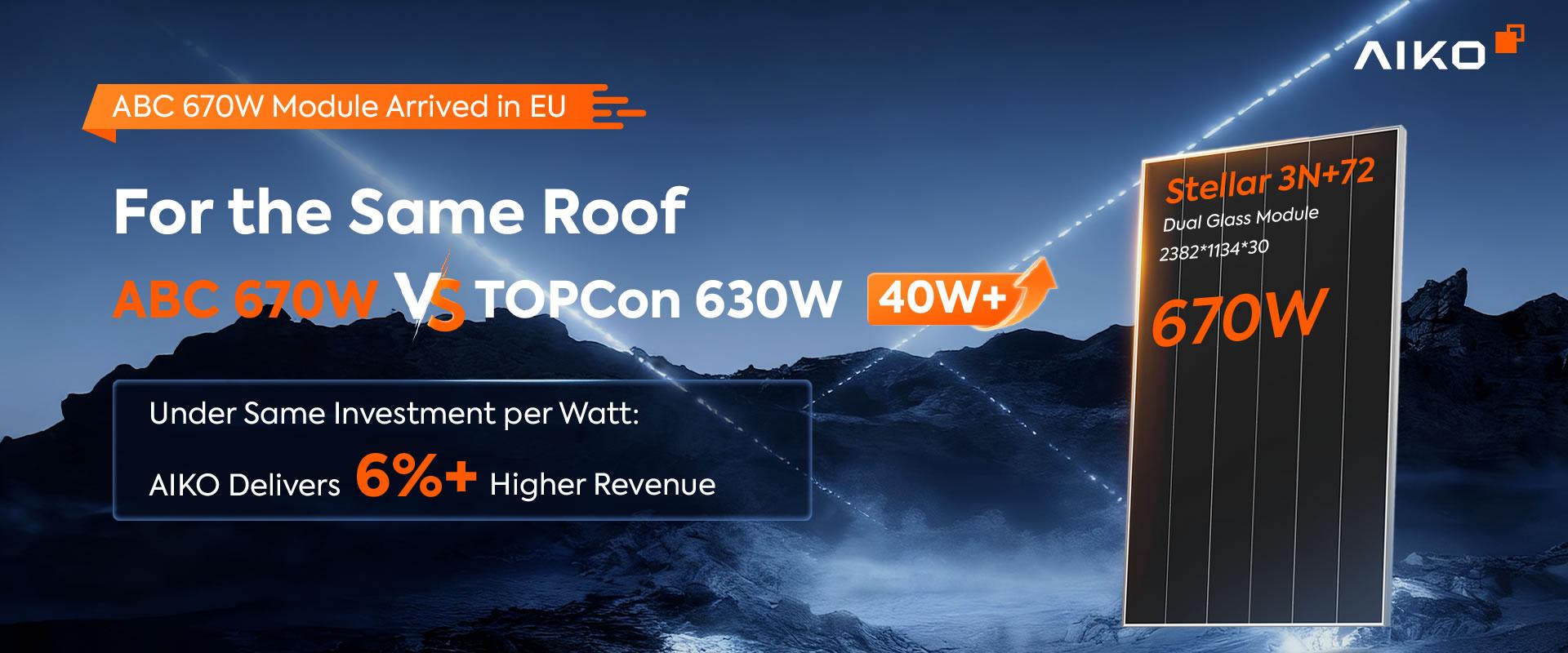

Aiko Solar Panels Review: N-Type ABC Cells, Efficiency & Pricing
Aiko Energy (full company name: Aiko Solar Energy Co., Ltd) is a Chinese solar panel manufacturer specialising in N-type ABC (All Back Contact) cell technology. Aiko panels sit among the highest-efficiency residential solar panels on the market. Founded in 2009 and headquartered in Shanghai, Aiko has emerged as a serious competitor to established premium brands such as SunPower, Maxeon, and LONGi.
Aiko solar panels typically achieve 23–24%+ cell efficiency, with their flagship Neostar series (and the newer Nebular bifacial line) designed for UK homeowners who want maximum power output per square metre. In 2026, Aiko panels are available through a growing number of UK installers at a premium price point of £200–£350 per panel.
Quick Answer
Aiko solar panels are made by Aiko Solar Energy Co., Ltd in China and use N-type ABC (All Back Contact) cell technology, putting them among the highest-efficiency residential panels available, at 23–24%+. The Neostar series tops out at 485W per panel (Gen 3 / Neostar 3), the bifacial Nebular line covers 450–480W, and the commercial Comet series reaches 500–650W. Aiko panels carry a 25-year product warranty and 30-year performance guarantee. They cost £200–£350 per panel in the UK, competing with SunPower/Maxeon and LONGi Hi-MO X, and sit clearly above mainstream brands like Jinko, JA Solar and DMEGC.
Last updated September 2026
Fact-checked by John Rooney, Solar Energy Editor. Editorial policy
What is Aiko ABC technology?
Aiko’s key innovation is their ABC (All Back Contact) cell architecture, built on N-type silicon wafers. Unlike conventional solar cells where metal busbars run across the front surface (casting shadows and reducing light absorption), ABC cells place all electrical contacts on the rear of the cell. This maximises the active surface area exposed to sunlight and pushes efficiency to levels previously only achieved by SunPower/Maxeon IBC panels. For a primer on how cell architectures compare, see our guide to solar panel types.
N-Type Silicon
N-type wafers suffer less from light-induced degradation (LID) than older P-type cells. This means Aiko panels maintain higher output over their lifetime, with first-year degradation of just 1% and annual degradation of around 0.4% thereafter.
All Back Contact
By moving all busbars and metal contacts to the rear of the cell, the entire front surface captures sunlight. This eliminates shading losses from busbars and gives Aiko panels their distinctive clean, uniform black appearance.
High Bifaciality
Aiko ABC cells are inherently bifacial, meaning they can capture reflected light from the rear side. While this is most beneficial in ground-mounted or flat-roof installations, it provides a small efficiency boost even on standard pitched roofs.
How ABC compares to other cell technologies
ABC is Aiko’s proprietary version of back-contact cell technology. It competes with SunPower/Maxeon’s IBC (Interdigitated Back Contact) cells and LONGi’s HPBC (Hybrid Passivated Back Contact) cells. All three approaches aim to maximise efficiency by moving contacts off the front surface, but Aiko claims their ABC process is more cost-effective to manufacture at scale, potentially bringing premium-tier efficiency to a wider market.
Who makes Aiko solar panels and where are they made?
Aiko solar panels are manufactured by Aiko Solar Energy Co., Ltd. (commonly shortened to Aiko Energy), a publicly listed Chinese company headquartered in Shanghai. Aiko was founded in 2009 and listed on the Shanghai Stock Exchange in 2023 (ticker SH:600732). The company is one of the world’s largest suppliers of solar cells, with over 17 years of solar cell manufacturing experience before launching its own branded residential panels.
Manufacturing locations
Aiko panels are produced in the company’s manufacturing facilities in mainland China, primarily across:
- Zhuhai, Guangdong Province (cell & module fab)
- Yiwu, Zhejiang Province (cell production)
- Foshan, Guangdong Province (module assembly)
- Tianjin (module production)
Aiko has also announced plans for additional capacity in Southeast Asia to serve markets affected by US tariffs on China-made modules.
Company background
- Founded: 2009
- Headquarters: Shanghai, China
- Stock listing: Shanghai Stock Exchange (SH:600732)
- Original business: solar cell supply to module makers
- Branded panels launched: 2022 (Neostar series)
- Annual cell capacity: 50+ GW (one of the largest globally)
- Module brand name in some markets: Aiko Energy
Aiko Solar Energy is sometimes confused with other “Aiko” branded products in lighting and electronics, but the solar business is a separate, dedicated entity. All UK-supplied Neostar and Nebular panels are manufactured in China and shipped via European distribution partners.
Aiko panel range: Neostar & Nebular series (2026)
Aiko’s residential lineup centres on the Neostar series (Gen 2 and the newer Gen 3, sometimes marketed as Neostar 3) and the Nebular bifacial series. Aiko also produces a Comet series for utility-scale projects with wattages up to 650W. All current panels feature N-type ABC cells, an all-black front-side aesthetic, and are designed for high-performance residential, commercial, and utility installations.
Aiko Neostar & Nebular wattage variants (residential)
| Model | Wattage | Efficiency | Dimensions | Weight | Cells |
|---|---|---|---|---|---|
| Neostar 3 (Gen 3) 2S+ | 475–485W | 24.2%+ | 1,134 × 1,762 mm | ~22 kg | 54 (N-type ABC) |
| Neostar 2S+ (Gen 2) | 460–470W | 23.6%+ | 1,134 × 1,722 mm | ~21.5 kg | 54 (N-type ABC) |
| Neostar 2S | 440–455W | 23.0%+ | 1,134 × 1,722 mm | ~21 kg | 54 (N-type ABC) |
| Neostar 8N | 420–435W | 22.8%+ | 1,052 × 1,757 mm | ~20 kg | 108 half-cut (N-type ABC) |
| Nebular 2S+ (bifacial) | 465–480W | 23.8%+ | 1,134 × 1,762 mm | ~24 kg (glass-glass) | 54 (N-type ABC, bifacial) |
| Nebular 2S | 450–465W | 23.4%+ | 1,134 × 1,722 mm | ~23.5 kg (glass-glass) | 54 (N-type ABC, bifacial) |
Aiko Comet series (commercial / utility-scale)
| Model | Wattage | Efficiency | Cells | Typical use |
|---|---|---|---|---|
| Comet 2S+ | 500–510W | 23.2%+ | 72 (N-type ABC) | Large commercial roofs |
| Comet 2P | 620–650W | 22.5%+ | 132 half-cut (N-type ABC) | Solar farms / utility-scale |
Most UK residential installations use Neostar 2S+ or Neostar 3 panels in the 455W–485W range, paired with a hybrid inverter and battery. The Nebular bifacial line is a strong fit for flat roofs, ground mounts, and east-west pitched setups where rear-side light gain is meaningful. The 500W+ Comet series is generally specified for commercial buildings rather than homes.
All-black design
Because all contacts are on the rear, the front surface of Aiko Neostar panels is uniformly black with no visible busbars or gridlines. This gives a sleek, modern appearance that is popular for UK homes where aesthetics matter.
Low-light performance
N-type ABC cells perform well in low-light and overcast conditions, an advantage for UK installations where cloudy days are common. Aiko panels maintain a higher percentage of their rated output in diffuse light compared to standard PERC panels.
Specifications are based on manufacturer data sheets. Actual wattage and efficiency may vary slightly by production batch. Always confirm exact model specifications with your installer. Full Aiko datasheets (PDF) are published on the Aiko Solar product page. Ask your installer for the specific revision matching the modules they’ll deliver.
How much do Aiko solar panels cost in the UK?
Aiko panels sit at the premium end of the UK solar panel market. They are more expensive than mainstream brands like JA Solar or Canadian Solar, but compete on price with SunPower/Maxeon and LONGi Hi-MO X. Prices below are estimates for panels supplied and installed in 2026, including 0% VAT. For broader UK pricing context, see our solar panels cost guide.
| System Size | Number of Panels | Estimated Cost (installed) | Cost per Panel |
|---|---|---|---|
| 3.5 kW | 8 panels | £6,500–£8,000 | £200–£280 |
| 5 kW | 12 panels | £8,500–£11,000 | £220–£300 |
| 7 kW | 16 panels | £11,500–£14,000 | £250–£330 |
| 10 kW | 22 panels | £14,000–£18,000 | £250–£350 |
0% VAT on residential solar installations
Aiko solar panels qualify for 0% VAT when supplied and installed on residential properties in the UK. This applies to panels, inverters, batteries, and mounting equipment installed under the same contract. The 0% VAT rate is in effect until at least March 2027.
Why are Aiko panels more expensive?
- N-type ABC cells cost more to manufacture than standard PERC or TOPCon cells
- Higher wattage per panel means fewer panels needed, partially offsetting the price premium
- Premium warranty (25-year product, 30-year performance) is factored into the price
- Limited UK distribution in 2026 means less price competition between installers
Prices are estimates based on UK market rates in 2026. Actual costs vary by installer, location, roof complexity, and inverter/battery selection. Always obtain multiple quotes.
Get a quote for Aiko solar panels
Compare prices from MCS-certified installers. Free, no obligation.
Get a Quote ↓Aiko vs other premium solar panel brands
Aiko competes directly with the top tier of residential solar panel manufacturers. Here is how their Neostar series stacks up against the leading alternatives available in the UK. For a wider view across all brands sold here, see our best solar panels UK guide and the full solar panel brands directory.
| Feature | Aiko Neostar | Maxeon 7 | LONGi Hi-MO X | Jinko Tiger Neo | DMEGC Infinity | JA Solar DeepBlue 4.0 |
|---|---|---|---|---|---|---|
| Cell technology | N-type ABC | N-type IBC | N-type HPBC | N-type TOPCon | N-type TOPCon | N-type TOPCon |
| Max panel efficiency | 24.2%+ | 24.1% | 23.2% | 22.5% | 22.3% | 22.5% |
| Max wattage (residential) | 485W | 430W | 445W | 450W | 450W | 450W |
| Product warranty | 25 years | 40 years | 25 years | 25 years | 25 years | 25 years |
| Performance warranty | 30 yrs (87.4%) | 40 yrs (88.25%) | 30 yrs (87.4%) | 30 yrs (87.4%) | 30 yrs (87.4%) | 30 yrs (87.4%) |
| Appearance | All-black, no busbars | All-black, no busbars | All-black | All-black or silver frame | All-black | All-black |
| UK price per panel (est.) | £200–£350 | £280–£400 | £180–£300 | £130–£220 | £120–£200 | £130–£220 |
| UK availability | Growing | Established | Widely available | Widely available | Widely available | Widely available |
Aiko vs SunPower/Maxeon
SunPower/Maxeon has been the benchmark for premium back-contact panels for over a decade. Maxeon 7 panels still edge ahead on peak efficiency (24.1% vs 23.6%) and offer an unmatched 40-year warranty. However, Aiko Neostar panels deliver higher wattage per panel (470W vs 430W) and are typically £50–£100 cheaper per panel. Aiko is the newer brand with less track record in the UK market.
Aiko vs LONGi Hi-MO X
LONGi is the world’s largest solar panel manufacturer and their Hi-MO X series uses HPBC back-contact technology. LONGi panels are more widely available in the UK and generally £20–£50 cheaper per panel. Aiko edges ahead on peak efficiency and wattage, but LONGi has a stronger UK distribution network and longer track record.
Aiko vs Jinko Solar
Jinko is one of the largest panel manufacturers globally and their Tiger Neo series uses N-type TOPCon cells (typically 22.0–22.5% efficiency, 430–450W). Jinko panels are roughly £60–£120 cheaper per panel and are stocked by almost every UK installer. Aiko wins on efficiency, wattage, and aesthetics; Jinko wins on price, availability, and track record. Aiko makes sense when roof space is tight; Jinko is the safer mainstream choice.
Aiko vs DMEGC
DMEGC is a high-volume Chinese manufacturer popular with UK Octopus Energy installations. DMEGC panels use N-type TOPCon cells (around 22.3% efficiency, 430–450W) and are noticeably cheaper, often £80–£130 less per panel. Aiko delivers higher efficiency and wattage with a cleaner all-black look, but DMEGC offers stronger value per watt and is one of the easiest panels to source through MCS-certified installers in 2026. See our DMEGC review for the full comparison.
Aiko vs JA Solar
JA Solar is a Tier 1 mainstream brand using N-type TOPCon (DeepBlue 4.0) cells at around 22.5% efficiency and 430–450W per panel. JA panels are widely stocked across UK installers and typically cost £70–£120 less per panel than Aiko. Aiko Neostar panels lead on efficiency (~1.5 percentage points higher) and per-panel wattage. For a large roof with unrestricted space, JA Solar usually offers better value; for a smaller roof needing maximum kWh per square metre, Aiko is the stronger pick.
Aiko vs Canadian Solar HiHero
Canadian Solar’s HiHero series uses N-type HJT (heterojunction) cells. Efficiency is similar to Aiko Neostar Gen 2 (~23.3%) at slightly lower wattage and a comparable warranty. Canadian Solar has a longer UK track record and wider distribution. Aiko edges ahead on the very latest Gen 3 panels and aesthetics, while Canadian Solar offers more competitive pricing.
Aiko warranty and performance guarantee
Aiko offers one of the strongest warranty packages in the residential solar panel market. Their warranty terms reflect confidence in the durability of N-type ABC cell technology.
| Warranty Type | Duration | Details |
|---|---|---|
| Product warranty | 25 years | Covers manufacturing defects in materials and workmanship |
| Performance warranty | 30 years | Guarantees at least 87.4% of rated output at year 30 |
| First-year degradation | – | Maximum 1% output loss in year one |
| Annual degradation (years 2–30) | – | Maximum 0.4% per year |
What the warranty covers
- Manufacturing defects in cells, glass, frame, and junction box
- Power output falling below the warranted degradation curve
- Replacement or repair of defective panels
- Covers both product defects and performance shortfalls
Warranty considerations for UK buyers
Aiko is a relatively new brand in the UK market. While the warranty terms are excellent on paper, it is worth confirming that your installer can facilitate warranty claims through Aiko’s European distribution network. Established brands like SunPower/Maxeon and LONGi have longer-standing UK warranty infrastructure.
Aiko solar panels: pros and cons
Aiko’s ABC architecture changes the trade-offs you get compared to a standard TOPCon panel. The list below covers where that matters for a UK roof and where it doesn’t.
Pros
- 23.6% module efficiency – higher than Jinko Tiger Neo (22.5%), JA Solar DeepBlue (22.3%) and LONGi Hi-MO 6 (22.8%) for residential panels sold in the UK
- High wattage per panel – up to 470W means fewer panels needed, ideal for limited roof space
- Premium all-black aesthetic – no visible busbars or gridlines for a sleek, modern look
- Excellent low-light performance – N-type ABC cells perform well in overcast UK conditions
- Strong warranty – 25-year product warranty and 30-year performance guarantee
- Low degradation – N-type technology means slower performance decline over the panel’s lifetime
- Bifacial capability – can capture reflected light from the rear side for additional output
Cons
- Premium pricing – £200–£350 per panel is well above mainstream brands like JA Solar or Trina
- Limited UK track record – Aiko is newer to the UK market than SunPower, LONGi, or Canadian Solar
- Fewer UK installers – not yet as widely stocked as mainstream brands, limiting installer choice
- Warranty servicing – as a newer entrant, Aiko’s UK warranty infrastructure is less proven than established brands
- Overkill for large roofs – if you have ample roof space, cheaper panels with lower efficiency may offer better value per watt
- Chinese manufacturer – some buyers prefer European or US-headquartered brands, though most panels are manufactured in China regardless
Aiko solar panels reviews: what UK owners and installers say
Aiko launched its branded Neostar panels in 2022, so the body of independent UK owner reviews is still smaller than for long-established brands like LONGi, JA Solar, or Jinko. Here’s a balanced summary of what current UK feedback suggests, drawn from MCS-certified installer commentary, owner posts on UK solar forums, and aggregated review platforms.
What owners praise
- Strong real-world generation in winter and on overcast days
- The clean, all-black aesthetic with no visible busbars
- Lower panel count vs cheaper brands for the same kWp
- Consistent monitoring data showing low first-year degradation
Common concerns
- Higher upfront price vs Jinko/JA Solar/DMEGC equivalents
- Fewer installers stocking them, leading to less price competition
- Limited long-term track record (oldest UK installs are 2–3 years old)
- Warranty claims are routed via European distributors, not direct from China
Are Aiko panels on Trustpilot?
Aiko Solar Energy does not run a UK consumer Trustpilot page (it sells through installers, not direct to homeowners), so searches for “Aiko solar panels Trustpilot” will surface reviews of installers who fit Aiko panels rather than the brand itself. To assess Aiko in the UK, review-check the installer on Trustpilot, Google Reviews, and the MCS database, then ask them how many Aiko Neostar systems they’ve commissioned and request references. Manufacturer-level signals (financial stability, stock listing, cell capacity) matter for the warranty. Installer reviews matter for the install quality.
Aiko solar panels: UK availability and installation
Aiko panels are available in the UK through a growing network of MCS-certified solar installers. Availability has expanded since 2025, with several major UK distributors now stocking the Neostar series. Availability is not yet as widespread as mainstream brands.
How to get Aiko panels installed
- Request Aiko Neostar panels specifically when getting quotes
- Use an MCS-certified installer to qualify for 0% VAT and SEG payments
- Compare at least 3 quotes, since prices vary widely between installers
- Ask your installer about their relationship with Aiko’s distribution network
- Confirm warranty claim process before committing
Compatible inverters and batteries
Aiko panels are compatible with all standard solar inverters and optimisers. Popular pairings in the UK include the Tesla Powerwall 3 (with built-in solar inverter), Sigenergy SigenStor hybrid inverters, FoxESS H1 hybrids, Huawei SUN2000, SolarEdge with power optimisers, and Enphase microinverters. Your installer will recommend the best inverter match for your system size and roof layout.
Smart Export Guarantee (SEG)
Aiko panels installed by an MCS-certified installer qualify for the Smart Export Guarantee, which pays you for surplus electricity exported to the grid. SEG rates vary by energy supplier but typically sit around 13p per kWh in 2026, with the best tariffs paying up to about 15p. Higher-efficiency Aiko panels generate more surplus, potentially increasing your SEG income.
Aiko solar panels FAQ
Are Aiko solar panels any good?
Yes. Aiko solar panels are among the highest-efficiency residential panels available in 2026. Their N-type ABC cell technology delivers 23–24%+ efficiency, excellent low-light performance, and very low degradation rates. They carry a 25-year product warranty and 30-year performance guarantee. The main considerations are the premium price and Aiko's relatively short track record in the UK market.
What is N-type ABC technology?
ABC stands for All Back Contact. It is Aiko's proprietary solar cell technology where all electrical contacts are placed on the rear of the cell rather than the front. This eliminates shading from busbars, maximises light absorption, and achieves higher efficiency than conventional cells. It is similar in concept to SunPower/Maxeon's IBC technology.
How much do Aiko solar panels cost in the UK?
Aiko Neostar panels typically cost £200–£350 per panel in the UK when supplied and installed. A full 5 kW system (approximately 12 panels) costs £8,500–£11,000 installed including 0% VAT in 2026. This is a premium over mainstream brands but competitive with other high-efficiency panels like SunPower/Maxeon.
How do Aiko panels compare to SunPower/Maxeon?
Aiko and SunPower/Maxeon both use back-contact cell technology. Maxeon 7 panels have a slightly higher peak efficiency (24.1% vs 23.6%) and an unmatched 40-year warranty. Aiko Neostar panels offer higher wattage per panel (up to 470W vs 430W) and are typically £50–£100 cheaper per panel. SunPower/Maxeon has a much longer track record and stronger UK warranty infrastructure.
Are Aiko panels available in the UK?
Yes. Aiko Neostar panels are available through a growing number of UK solar installers and distributors in 2026. Availability has expanded but is not yet as widespread as mainstream brands like LONGi, JA Solar, or Canadian Solar. When requesting quotes, ask specifically for Aiko panels to find installers who stock them.
What warranty do Aiko solar panels come with?
Aiko offers a 25-year product warranty covering manufacturing defects and a 30-year performance warranty guaranteeing at least 87.4% of rated output at year 30. First-year degradation is guaranteed at no more than 1%, with maximum 0.4% annual degradation thereafter. These are among the strongest warranty terms in the residential solar market.
Are Aiko panels worth the extra cost?
Aiko panels are worth the premium if you have limited roof space and need maximum power output per square metre, or if you value the all-black aesthetic and long-term performance guarantee. If you have a large roof with plenty of space, cheaper mainstream panels (e.g., JA Solar, Trina) may offer better value per watt. The efficiency advantage matters most on smaller or partially shaded roofs.
Do Aiko panels work well in the UK climate?
Yes. N-type ABC cells perform well in diffuse and low-light conditions, which are common in the UK. Aiko panels maintain a higher percentage of their rated output on cloudy days compared to older P-type PERC panels. The UK's moderate temperatures also help, since solar panels are more efficient in cooler conditions than in hot climates.
Where are Aiko solar panels made?
Aiko panels are manufactured in China. The company runs cell and module fabs across Zhuhai (Guangdong), Yiwu (Zhejiang), Foshan (Guangdong), and Tianjin. Aiko Solar Energy Co., Ltd is headquartered in Shanghai and listed on the Shanghai Stock Exchange (ticker SH:600732). All UK-supplied panels are shipped via European distribution partners.
Who makes Aiko solar panels?
Aiko solar panels are made by Aiko Solar Energy Co., Ltd, a publicly listed Chinese solar manufacturer founded in 2009. The company started as a solar cell supplier to other module makers and launched its own branded panels (the Neostar series) in 2022. Aiko has more than 50 GW of annual cell capacity, making it one of the largest solar cell producers in the world.
What is the Aiko Neostar 3 / Aiko Gen 3 panel?
Neostar 3 (also called Gen 3) is Aiko's latest generation of N-type ABC residential panels, launched after the Neostar 2S/2S+ Gen 2 line. Gen 3 pushes module efficiency to around 24%+ and per-panel wattage to 475–485W, up from 460–470W on Gen 2. Gen 3 panels also use slightly larger 1,762 mm modules and refined cell metallisation for better low-light performance.
What is the Aiko Nebular series?
Nebular is Aiko's bifacial residential line. It uses the same N-type ABC cells as Neostar but in a glass-glass module that captures reflected light from the rear side. Nebular panels are heavier (~24 kg) and best suited to flat roofs, ground mounts, solar carports, or east–west pitched setups where rear-side gain is meaningful. Nebular wattages run 450–480W in current UK-available variants.
Are there 500W Aiko solar panels?
Yes. Aiko's Comet series goes up to 500–510W per panel using 72 N-type ABC cells, and the larger Comet 2P modules reach 620–650W. These are commercial / utility-scale panels rather than typical residential modules. Most UK home installations use Neostar or Nebular panels in the 455W–485W range.
Aiko vs Jinko solar panels: which is better?
Aiko leads on efficiency (~24% vs ~22.5%), wattage per panel (~485W vs ~450W), and aesthetics (no visible busbars). Jinko Tiger Neo wins on price (£60–£120 cheaper per panel), UK availability, and length of track record. Pick Aiko when roof space is tight or aesthetics matter; pick Jinko for the safer mainstream option with better £/watt.
DMEGC vs Aiko solar panels: what's the difference?
DMEGC uses N-type TOPCon cells at around 22.3% efficiency and 430–450W per panel, while Aiko Neostar uses N-type ABC cells at 23–24%+ and up to 485W. Aiko panels are typically £80–£130 more per panel. DMEGC offers stronger value per watt and is widely stocked (notably by Octopus Energy installations); Aiko offers higher per-panel output and a cleaner all-black look.
Where can I buy Aiko solar panels in the UK?
Aiko panels are not sold direct to consumers; they're supplied via MCS-certified solar installers and trade distributors. To buy Aiko Neostar or Nebular panels in the UK, request quotes from MCS-certified installers and specify Aiko by name. Compare at least 3 quotes, confirm the exact model and wattage on the quote, and ask the installer about their warranty claim process before signing.
Which Aiko solar panel is best?
For most UK homes in 2026, the best Aiko panel is the Neostar 3 (Gen 3) at 475–485W, which offers the highest efficiency (24.2%+) in the residential range. If your budget is tighter, the Neostar 2S+ (460–470W) delivers most of the same benefits for less. For flat roofs, ground mounts, or east-west arrays, the bifacial Nebular 2S+ (465–480W) is the better pick because it captures reflected light from the rear side.
What are the Aiko 475W and 480W solar panels?
The 475W and 480W wattages both belong to Aiko's current residential lines. The Neostar 3 (Gen 3) is sold in 475–485W variants using 54 N-type ABC cells at 24.2%+ efficiency, while the bifacial Nebular 2S+ tops out at 480W in a glass-glass module. Both share the same 25-year product warranty and 30-year performance guarantee; the exact wattage you receive depends on the production batch your installer sources.
Can I see the Aiko solar panel datasheet?
Yes. Full datasheets for every Neostar, Nebular and Comet model are published on the Aiko Solar website under Products. They include rated power, efficiency, dimensions, weight, temperature coefficients, mechanical load ratings, and warranty terms. Ask your installer for the datasheet revision matching the exact modules they'll deliver, as specifications can be revised between production batches.
Related Guides
Best Solar Panels UK
Top 5 solar panel systems ranked for UK homes.
Panel Brands
Best solar panel brands available in the UK.
Maxeon Solar Panels
Maxeon 7 IBC panels with a 40-year warranty: specs, UK pricing, the SunPower link, and how they compare to Aiko and LONGi.
SunPower Solar Panels
SunPower in the UK: the Maxeon link, the 2024 bankruptcy explained, specs, warranty, and whether they're still worth buying.
Solar Panel Cost UK
Full cost breakdown and payback periods.
Are Solar Panels Worth It?
Honest pros, cons, and payback analysis for UK homes.
Inverter Guide
Comparing string, micro, and hybrid inverters.
Sources
- Aiko Solar: Official Website
- MCS: Microgeneration Certification Scheme
- Solar Energy UK: Industry Trade Association
- Ofgem: Smart Export Guarantee (SEG)
- HMRC: 0% VAT on Energy-Saving Materials
Last updated: September 2026
John Rooney is the founder of Solar Info and has been covering the UK solar energy market since 2023. He researches every battery and inverter brand against manufacturer datasheets, MCS and Ofgem data, and feedback from the MCS-certified installers in our directory before publishing.
Get a Quote for Aiko Solar Panels
Compare Aiko panel prices from MCS-certified installers near you. Free, no-obligation quotes.